
Key Points
SpaceX entered the record books on June 12 by raising $75 billion from its initial public offering.
However, a staggered lockup schedule, potential debt and equity offerings, and historical headwinds all threaten to weigh on SpaceX shares.
A trio of established trillion-dollar companies is ideally positioned to rocket past SpaceX by the end of this year.
- 10 stocks we like better than Meta Platforms ›
It’s been a history-packed year for Wall Street — and it’s not even half over. Through June 18, we’ve witnessed the Dow Jones Industrial Average, S&P 500, and Nasdaq Composite climb to new highs, the arrival of a new Fed chair, and the largest-ever initial public offering (IPO) burst onto the scene.
On June 12, Space Exploration Technologies (SpaceX)(NASDAQ: SPCX) officially unseated Saudi Aramco for the title of largest IPO cash raise in history. The $75 billion raised by Musk’s artificial intelligence (AI) and space economy goliath nearly tripled the capital raised from Saudi Aramco’s December 2019 IPO.
Where to invest $1,000 right now? Our analyst team just revealed what they believe are the 10 best stocks to buy right now, when you join Stock Advisor. See the stocks »

Image source: Getty Images.
History hasn’t been kind to mega-IPOs
In the days following SpaceX’s debut, its shares skyrocketed to a nearly $3 trillion valuation. For a brief moment, SpaceX was worth more than established industry leaders Microsoft and Amazon. But these gains proved fleeting, as should much of the retail investor euphoria surrounding SpaceX.
While structural changes will allow SpaceX fast entry into several major stock indexes, and its low float is helping buoy its share price, these dynamics will be relatively short-lived. Once the company’s staggered lockup schedule takes effect, we’ll witness the greatest wealth transfer in Wall Street’s storied history, from retail investors to SpaceX insiders.
Great look at the SpaceX shares unlock schedule as well as the potential passive buying schedule from @JSeyff @FrancisSharoon Depending on the early post-IPO returns, this could really play with and disperse the returns of “passive” funds (which is why there’s arguably no such… pic.twitter.com/KOuEkJlngF
— Eric Balchunas (@EricBalchunas) May 28, 2026
Over several months, insider selling, potentially dilutive debt and/or equity offerings, and the company’s abysmal operating results all threaten to crater SpaceX’s share price.
History hasn’t been particularly kind to mega-IPOs over the last 14 years, either. According to research from Truist Financial, the average year-one drawdown for 30 of the largest tech IPOs of the last 14 years is a staggering 55%!
Long story short, SpaceX’s $2 trillion-plus valuation is more mirage than foundation. Eventually, its share price is going to crater, allowing several other worthy trillion-dollar companies to leapfrog it in market cap. By the end of 2026, SpaceX should be looking up at the following three established trillion-dollar stocks.
1. Meta Platforms: $1.47 trillion market cap
The first trillion-dollar club member that shouldn’t have any trouble jumping past SpaceX’s bloated valuation before the end of this year is social media titan Meta Platforms (NASDAQ: META). Despite some concerns about Meta’s aggressive capital expenditures tied to its AI infrastructure build-out, there are several reasons to believe its shares will head higher.
For starters, Meta’s social media platforms have an unrivaled lure. Collectively, the company’s family of apps, including Facebook, Instagram, WhatsApp, Threads, and Facebook Messenger, attracted an average of 3.56 billion daily users in March 2026. With no other social platform close to attracting this many eyeballs, it’s no surprise that Meta can command an ad pricing premium from businesses.
Mark Zuckerberg’s company is also one of the few that has enjoyed immediate benefits from integrating AI solutions. Giving businesses access to generative AI solutions capable of tailoring static and video messages to users can improve ad click-through rates and enhance Meta’s ad pricing power.
Unlike SpaceX, which is a long way from generating recurring profits, Meta can offer investors an intriguing value proposition. Meta ended the June 18 trading session at a forward price-to-earnings (P/E) ratio of less than 16, representing a 23% discount to its average forward P/E over the trailing half-decade.
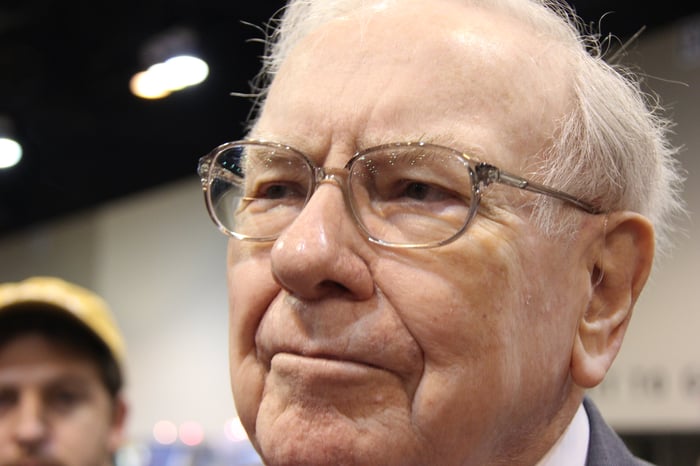
Warren Buffett retired as Berkshire Hathaway’s CEO on Dec. 31, 2025. Image source: The Motley Fool.
2. Berkshire Hathaway: $1.06 trillion market cap
Slow and steady wins the race. Although the conglomerate that now-retired billionaire Warren Buffett built into a trillion-dollar business is trailing SpaceX’s market cap by nearly $1.4 trillion, Berkshire Hathaway (NYSE: BRKA)(NYSE: BRKB) has the potential to leapfrog Musk’s SpaceX in the valuation column.
One unique trait that Berkshire Hathaway possesses is its treasure chest. For 14 consecutive quarters (ended March 31, 2026), Berkshire’s bosses have been net sellers of stocks to the tune of approximately $195 billion. When coupled with the ongoing profits of Berkshire’s operating segments, the company’s cash pile, including U.S. Treasury bills, has ballooned to more than $397 billion. This capital provides a very safe floor beneath Berkshire’s stock, and gives the company’s new CEO, Greg Abel, unparalleled financial flexibility.
Berkshire Hathaway is now sitting on an all-time high $397 Billion in Cash, enough to buy 478 companies in the S&P 500 🚨🤑 pic.twitter.com/iZKu6hjtKQ
— Barchart (@Barchart) May 18, 2026
To build on the previous point, many of Berkshire Hathaway’s operating segments are cyclical and predictable — two traits Wall Street values highly. Since economic expansions last substantially longer than recessions, Buffett and Abel have angled their company’s operating segments to capitalize on prolonged periods of growth.
A welcome return to share buybacks under Abel’s leadership is another catalyst that can lift Berkshire’s stock in 2026. Over the last eight years, Buffett and Abel have collectively spent $78 billon to repurchase their company’s stock.
3. Broadcom: $1.96 trillion market cap
Although it’s the smallest reach of the three stocks, networking specialist Broadcom (NASDAQ: AVGO) has the tools and intangibles needed to surpass SpaceX’s market cap before the year ends. Broadcom ended the June 18 trading session at a $480 billion market cap deficit to Musk’s space and artificial intelligence giant.
The immediate lure for Broadcom is its integral role in the AI data center build-out. Its solutions are capable of connecting tens of thousands of graphics processing units (GPUs) to maximize GPU compute capabilities and minimize tail latency.
Additionally, Broadcom’s application-specific integrated circuits (ASICs) may become staples for select AI hyperscalers. While Nvidia remains the face of AI data center infrastructure, Broadcom’s customized AI chips can support eyebrow-raising sales growth from hyperscalers for the foreseeable future.
The one worry for Broadcom is that game-changing innovations have a poor early track record. Every major innovation since the advent and proliferation of the internet in the mid-1990s has endured an early stage bubble-bursting event. Broadcom’s saving grace is that it has numerous operating segments beyond AI, including wireless chips used in smartphones. If the AI bubble bursts, Broadcom can still handily outperform SpaceX.
Should you buy stock in Meta Platforms right now?
Before you buy stock in Meta Platforms, consider this:
The Motley Fool Stock Advisor analyst team just identified what they believe are the 10 best stocks for investors to buy now… and Meta Platforms wasn’t one of them. The 10 stocks that made the cut could produce monster returns in the coming years.
Consider when Netflix made this list on December 17, 2004… if you invested $1,000 at the time of our recommendation, you’d have $417,305!* Or when Nvidia made this list on April 15, 2005… if you invested $1,000 at the time of our recommendation, you’d have $1,293,148!*
Now, it’s worth noting Stock Advisor’s total average return is 936% — a market-crushing outperformance compared to 209% for the S&P 500. Don’t miss the latest top 10 list, available with Stock Advisor, and join an investing community built by individual investors for individual investors.
*Stock Advisor returns as of June 22, 2026.
Sean Williams has positions in Amazon and Meta Platforms. The Motley Fool has positions in and recommends Amazon, Berkshire Hathaway, Broadcom, Meta Platforms, Microsoft, Nvidia, and Truist Financial. The Motley Fool has a disclosure policy.
5 Stocks Our Experts Predict Could Double In the Next Year
By submitting your email, you'll also get a free pivot & flow membership. A free daily market overview. You can unsubscribe at any time.